
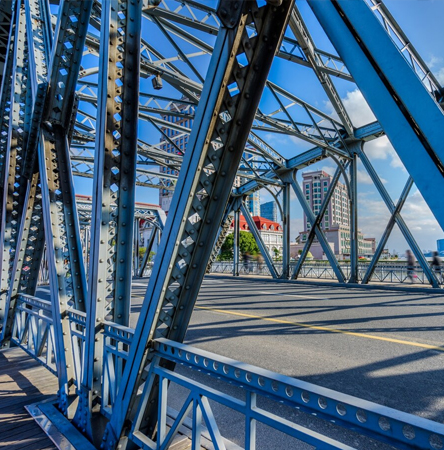
Steel Infrastructure
Structural Analysis: Engineers analyze the loads and stresses the structure will encounter to ensure it can withstand them.
Drafting and Modeling: Detailed blueprints and 3D models are created to visualize and plan the construction process.
Material Selection: Choosing the appropriate type and grade of steel based on strength, durability, and environmental considerations.
Cutting and Shaping: Steel components are cut and shaped according to the design specifications. Techniques include sawing, laser cutting, and plasma cutting.
Welding and Bolting: Steel parts are joined together using welding or bolting methods to form larger structural elements.
Surface Treatment: Applying coatings, galvanization, or other treatments to protect against corrosion and improve longevity.
Logistics: Planning the transportation of steel components from the fabrication site to the construction site. This includes handling oversized or heavy loads.
Handling: Using cranes, forklifts, and other equipment to load and unload steel elements safely.
Foundation Preparation: Ensuring the site is ready for the steel structure, including laying a stable foundation.
Assembly: Assembling steel components on-site according to the design plan. This involves positioning, aligning, and securing elements.
Quality Control: Inspecting joints, welds, and alignments to ensure they meet safety and design standards.
Cladding and Insulation: Adding external layers for weatherproofing, insulation, and aesthetics.
Interior Work: Installing floors, walls, and ceilings within the steel framework.
Steel infrastructure work involves the planning, design, fabrication, and construction of structures where steel is the primary material. This type of work is integral to many sectors, including construction, transportation, and industrial development. Here’s a detailed look at the processes and key aspects involved in steel infrastructure work:
Our fabrication and steel erection capabilities further enhance Homana's ability to deliver tailored solutions for projects across the Oil & Gas, Govt. Infrastructure, Power and Industries.
Our facility's specialization in constructing, assembling, steel component coupled with our unique at site modularization approach, offers several advantages. This approach not only lowers construction costs but also optimizes schedules and enhances overall quality. Modularization allows for greater efficiency in project execution, as components can be fabricated and assembled off-site before being transported to the project site for final installation. This can significantly reduce construction time and minimize disruptions to ongoing operations.
The capabilities of our Fabrication Facility, including process equipment fabrication, piping fabrication, and structural fabrication, position Homana as a versatile and reliable partner for clients seeking innovative solutions for their projects. Our ability to offer tailored solutions to the specific needs of each project underscores our commitment for delivering value and exceeding client expectations.